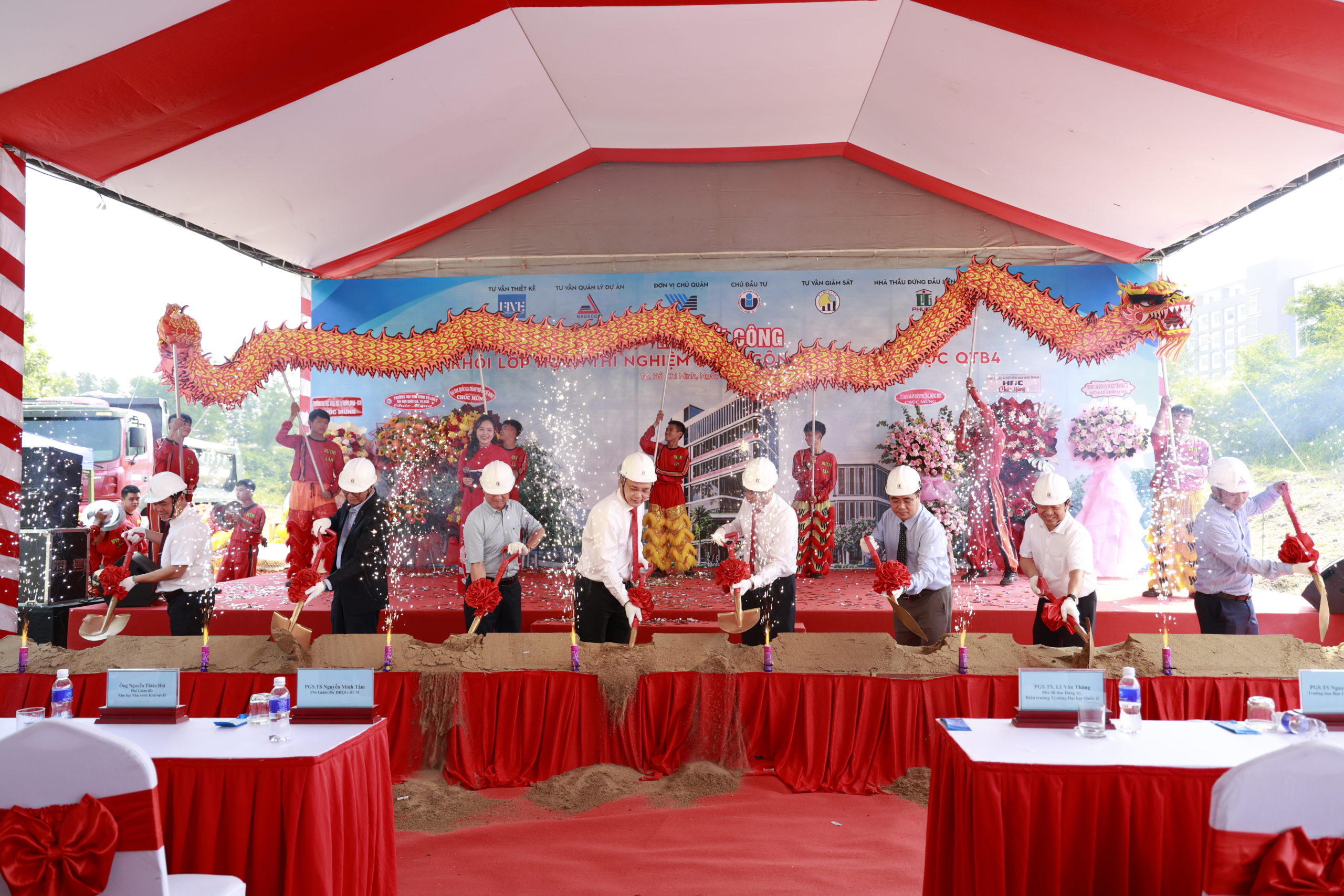
INTERNATIONAL UNIVERSITY BREAKS GROUND ON QT.B4 CLASSROOM–LABORATORY BUILDING


On the morning of January 20, 2026, International University (IU), Vietnam National University Ho Chi Minh City (VNU-HCM), held the groundbreaking ceremony for the QT.B4 classroom–laboratory building. This is the first construction project to be implemented on the HT6.2 land area, marking the beginning of the University’s expansion phase in 2026.
The QT.B4 project is expected to supplement laboratories and classrooms to serve teaching, learning, and scientific research in accordance with the strategic development plan of International University, in particular, and VNU-HCM in general. The project is aligned with the zoning plan of VNU-HCM and the detailed construction plan of International University. It is also the first project of the University to be developed through an architectural design competition, serving as a landmark in the campus’s architectural and landscape design.
With a strategic vision and a modern, environmentally friendly architectural orientation, the QT.B4 classroom–laboratory building is expected to contribute to breakthroughs in science and technology development, innovation, and national digital transformation, in line with Resolution No. 57-NQ/TW currently being actively implemented by universities nationwide.
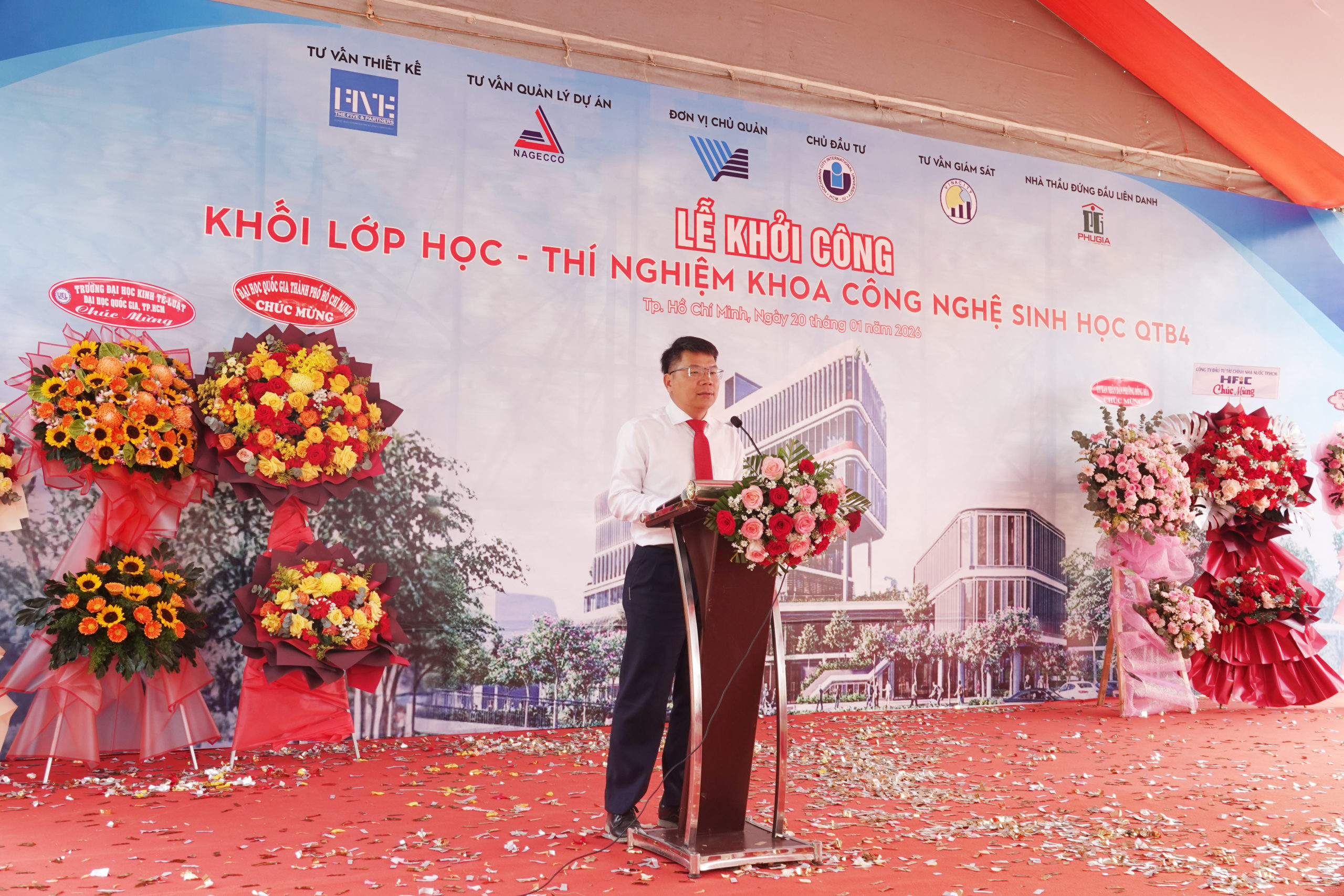
Assoc. Prof. Dr. Le Van Thang – President of the International University – delivered remarks at the groundbreaking ceremony of the QT.B4 classroom–laboratory building on January 20, 2026.
The investment project for the QT.B4 classroom–laboratory building was approved in principle by VNU-HCM in 2021, and its architectural design was selected in the same year. However, due to certain objective reasons related to the completion of legal planning procedures, the project could not commence construction as initially approved. Based on the zoning plan of VNU-HCM approved by the Prime Minister in July 2023 and the adjustment of the detailed construction plan of the International University approved by the Ministry of Construction in April 2025, the International University continued to carry out the necessary investment and construction procedures.
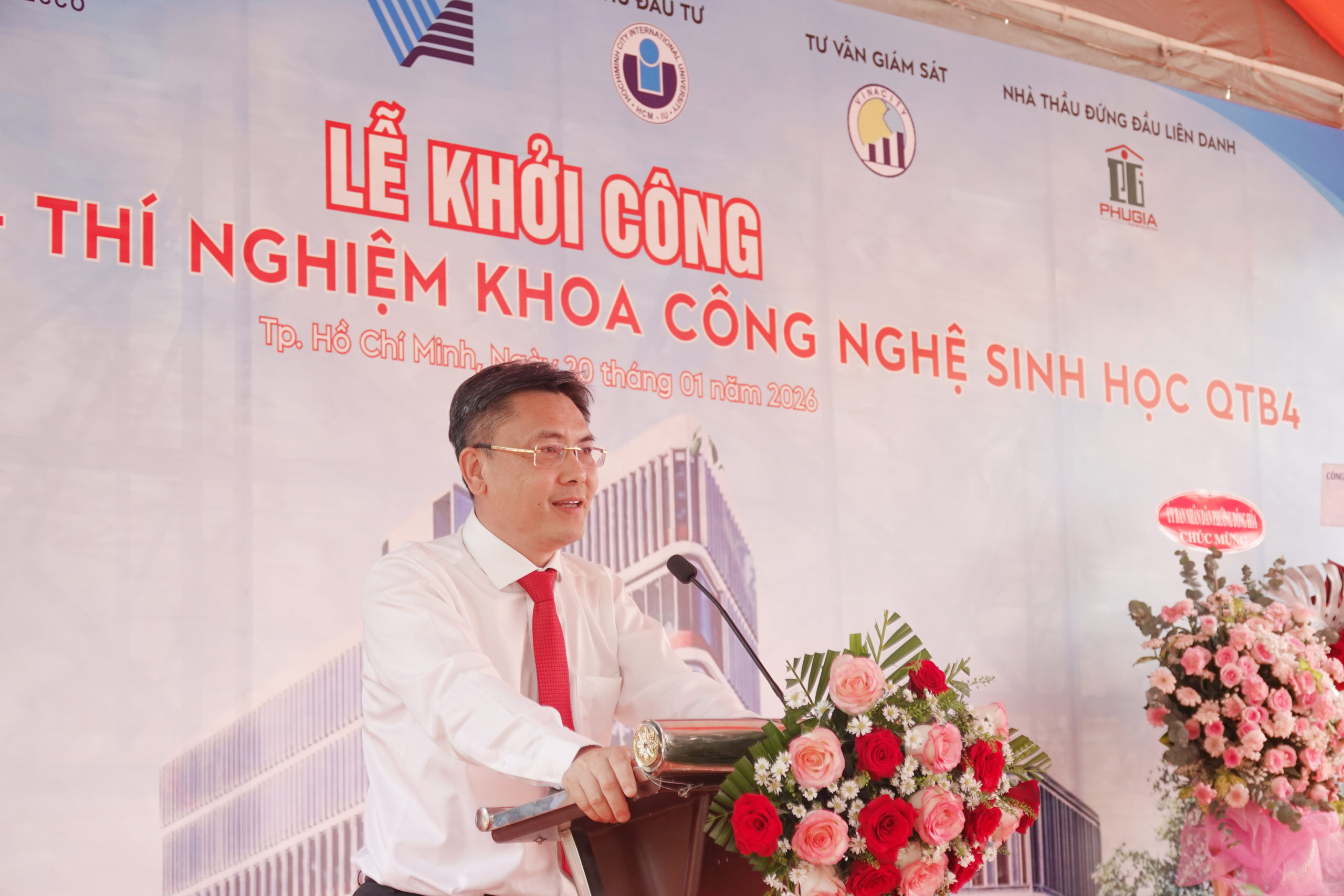
Assoc. Prof. Dr. Nguyen Minh Tam – Vice President of VNU-HCM – spoke on behalf of the VNU-HCM Board of Directors, providing guidance and assigning tasks to the International University and relevant units to ensure the project is implemented smoothly and on schedule.
Recently, International University has demonstrated perseverance and determination in completing tasks related to adjusting the detailed construction plan, preparing the feasibility study report, and implementing design work under the close guidance of VNU-HCM leadership, along with the efforts and commitment of all relevant parties.
Throughout the project implementation process, International University has received close, regular guidance and strong support from local authorities, the VNU-HCM Board of Directors, and the cooperation of departments, agencies, and related units. These factors have created significant motivation for the University to mobilize resources, accelerate progress, and invest in the construction of the QT.B4 project.
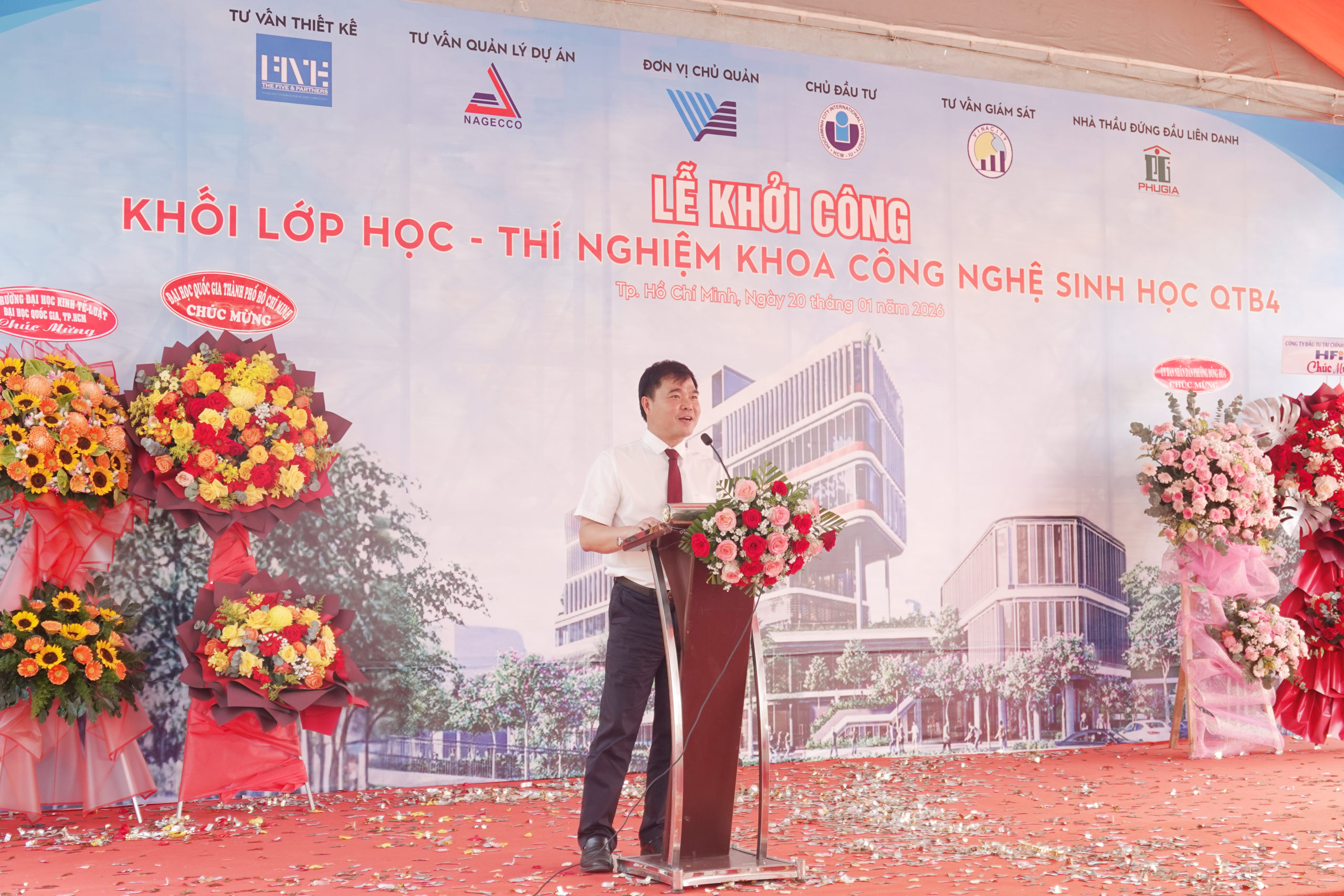
Mr. Le Sy Tuan – Director of Phu Gia Construction Investment Design Joint Stock Company, lead member of the QT-B4 Consortium – delivered remarks, expressed commitment during the construction process, and shared the orientation for coordination with the International University to ensure the project is implemented in accordance with its stated objectives.
“With close attention and direction of leaders at all levels, the strong coordination among relevant units, and the high sense of responsibility of the contractors, we hope that the QT.B4 project will be implemented on schedule, ensuring quality and safety, and will soon be put into effective operation,” shared Assoc. Prof. Dr. Le Van Thang – President of International University.
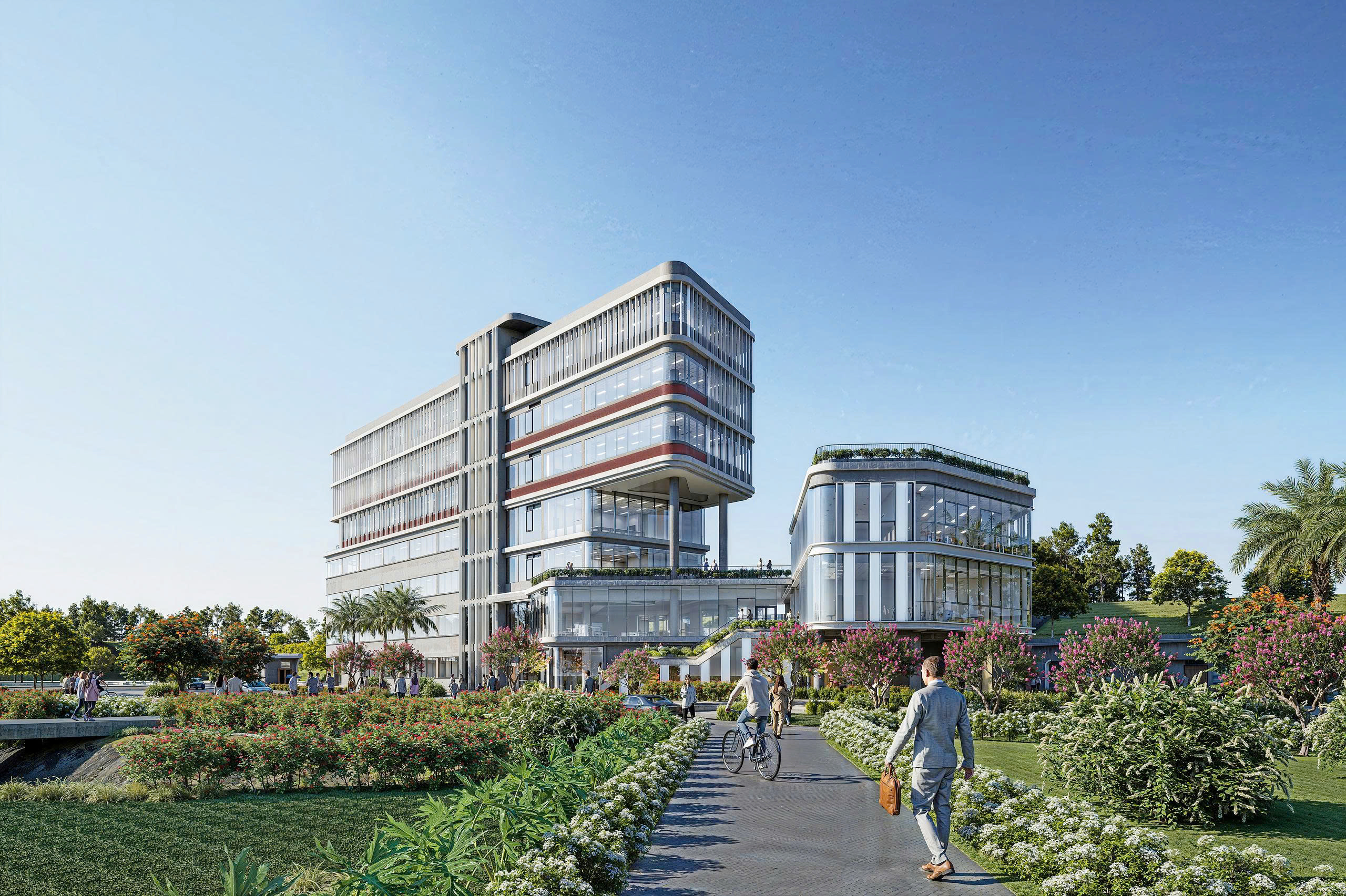
Image of the QT.B4 building upon completion in 2027.
Sustainable Development Goals: SDG4-Quality education, SDG9-Industry, innovation and infrastructure