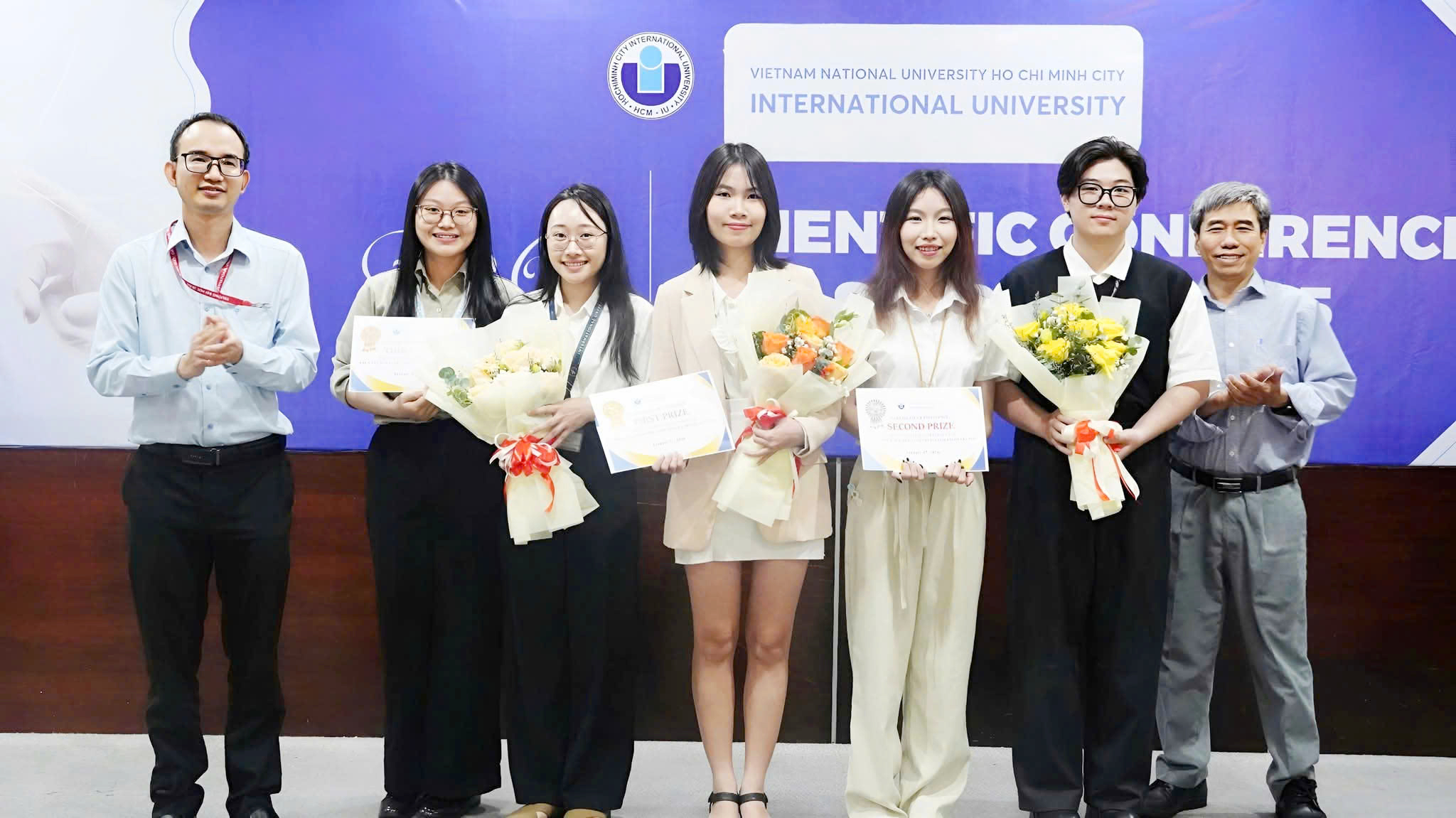
MỸ TRÀ WINS THE FIRST PRIZE AT THE 6TH STUDENT SCIENTIFIC RESEARCH CONFERENCE 2025
With the research topic titled “Green Marketing and Building Loyalty in the Digital Era: The Role of Brand Attitude and Digital Social Responsibility toward Generation Z Consumers,” Bùi Thị Mỹ Trà, a fourth-year student of the Faculty of Business Administration, under the supervision of Dr. Bùi Thị Thảo Hiền, won the First Prize at the 6th Student Scientific Research Conference in 2025 of the University of International University (VNU-HCM).
BTT: Why did Mỹ Trà choose this research topic?
Bùi Thị Mỹ Trà: I am currently a final-year student majoring in Marketing. Besides my academic studies, I have actively participated in extracurricular activities and competitions related to the environment and sustainable development. Throughout that journey, I gradually identified the research direction I wanted to pursue, and I can say that this topic lies at the intersection of two major passions of mine.
Through literature review and my own personal experiences, I realized that although Generation Z is often considered a group that supports green brands, this support does not easily translate into loyalty—especially in the context of digital transformation. This gap between “concern” and “commitment” led me to question the underlying factors behind young consumers’ green consumption behavior, which ultimately became the motivation for this research.
BTT: During the research process, what were the biggest difficulties you faced, especially since you conducted the study on your own
Bùi Thị Mỹ Trà: (Laughs) The biggest challenge was carrying out the entire research by myself, especially since this was my first time engaging in scientific research. From building the research model, choosing methodologies, collecting and processing data, to analyzing results and writing the report—I had to learn and do everything independently. During this process, I experienced significant time pressure, and there were moments when I doubted whether the research direction I was pursuing was truly appropriate. In addition, accessing high-quality academic literature was also a major challenge for me due to my limited experience.
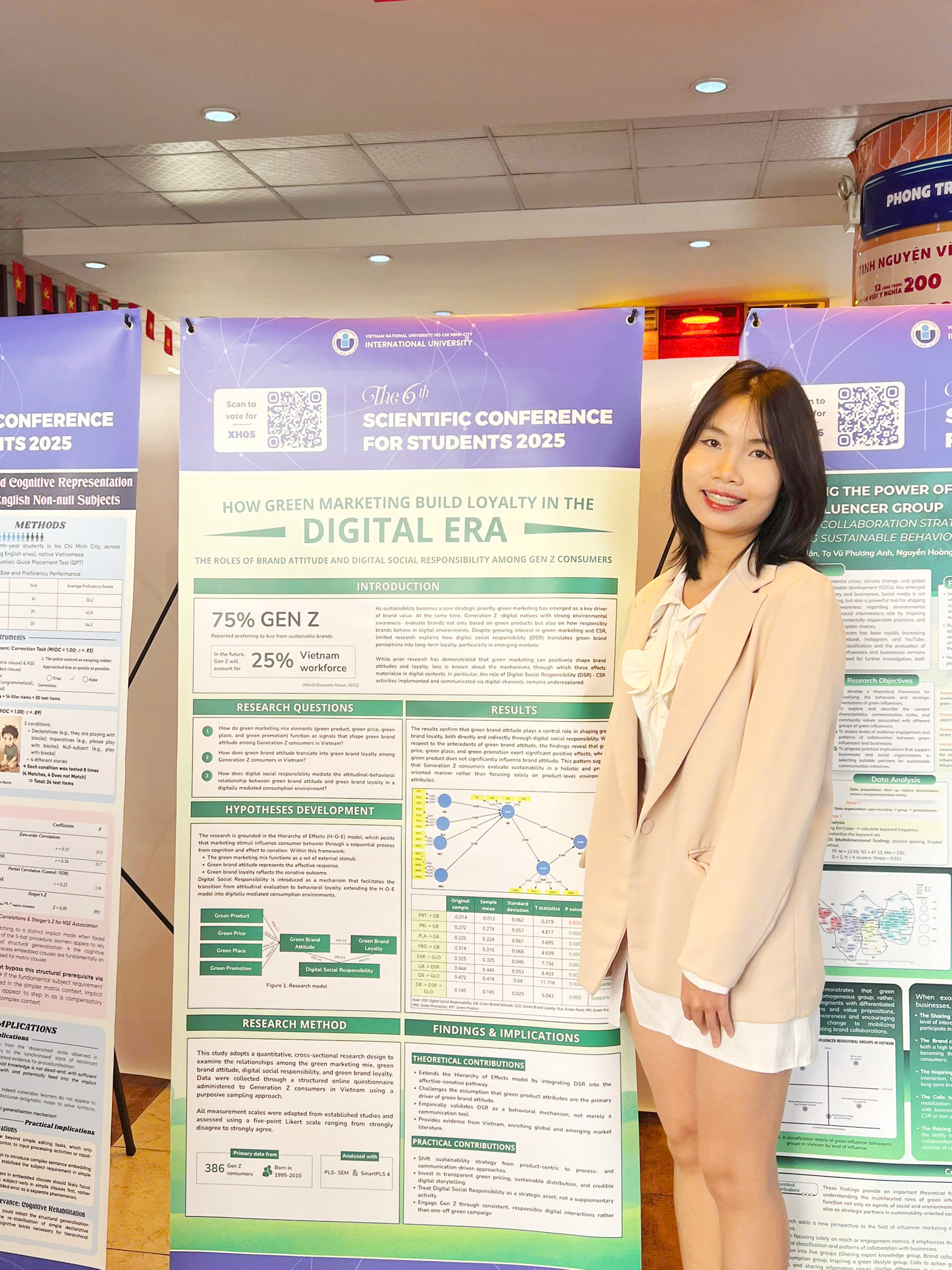
Bùi Thị Mỹ Trà and the poster of her research project at the 2025 Conference.
BTT: So how did you overcome those difficulties? Are there any “hard-earned lessons” or specific experiences you would like to share so that others can better understand your journey of “fighting the monster” alone?
Bùi Thị Mỹ Trà: To overcome these challenges, I chose not to give up and to keep learning continuously. I proactively reread materials multiple times, taught myself additional research methods, and boldly reached out to my supervisor, Dr. Thảo Hiền, whenever I felt stuck. Her timely guidance and constructive feedback helped me adjust my research direction and gain more confidence in the process.
The biggest lesson I learned is that research is rarely a smooth journey from the start—especially when working alone and doing it for the first time. However, having the courage to begin, to ask questions, to revise, and to persevere until the end helped me grow tremendously. I believe that for students who have never done research before, they should not be too afraid of not being “good enough,” because doing research is a process of learning while doing—not something you wait until you are perfect to start.
BTT: While conducting this research, what aspect of your work did you find most meaningful or compelling?
Bùi Thị Mỹ Trà: What impressed me most were the results that differ from previous studies when examined in the digital environment. They show that “green” is no longer just a story about products, but about corporate behavior. Gen Z no longer places trust simply because a product is labeled as sustainable; instead, they carefully observe how brands communicate, respond, and take responsibility on digital platforms. To me, this is especially meaningful because it demonstrates how digital transformation is reshaping Gen Z’s loyalty—from loyalty to products to loyalty to how brands behave.
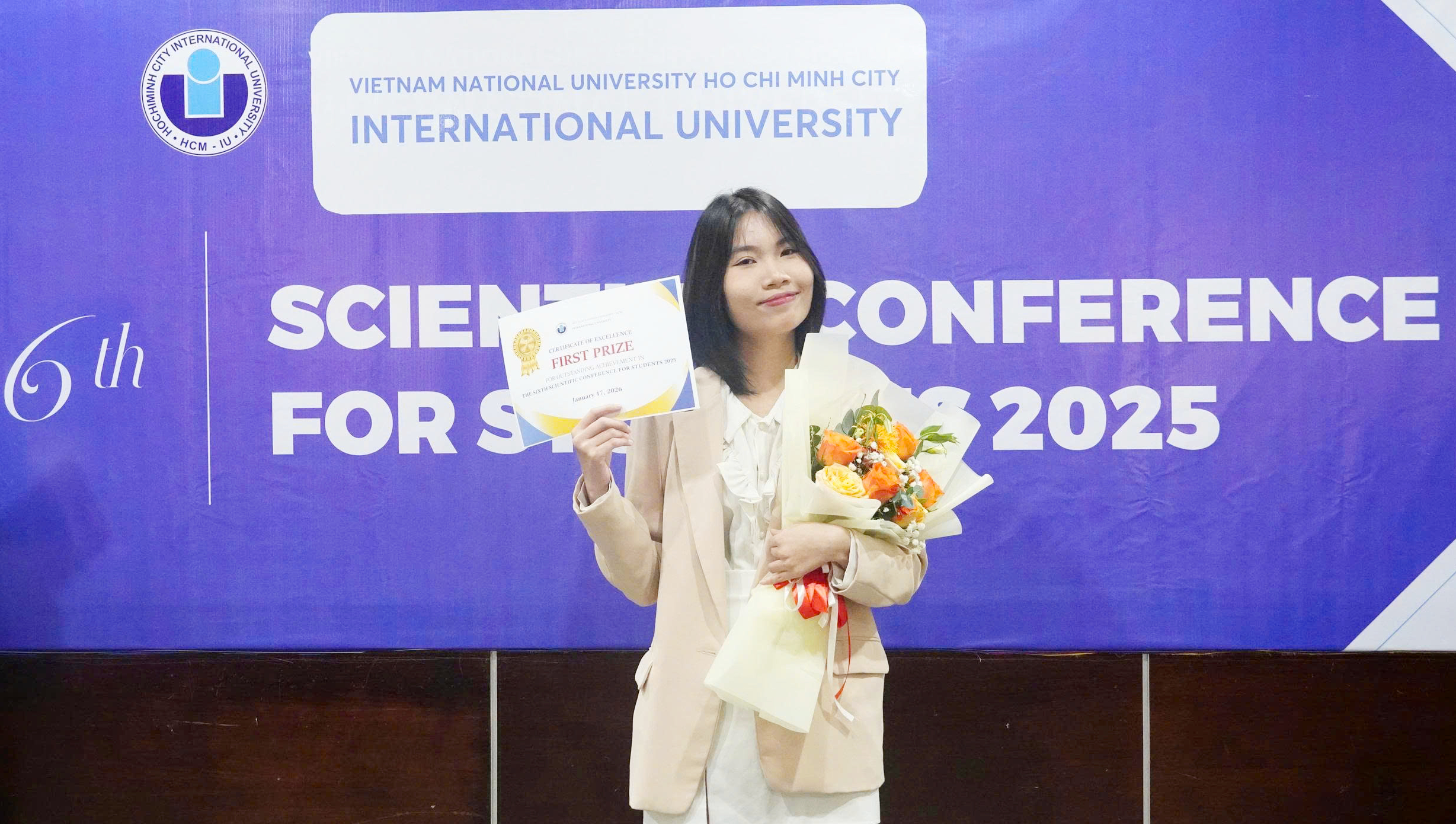
Bùi Thị Mỹ Trà receiving the First Prize at the 6th Student Scientific Research Conference in 2025.
BTT: Do you expect this research to have practical applications in the future?
Bùi Thị Mỹ Trà: In an era when Vietnam and the world are focusing on digital transformation while simultaneously pursuing sustainable development, I hope this research can be applied by businesses, especially those targeting young consumers. My study shows that to build sustainable loyalty, companies cannot focus solely on products; instead, they must pay close attention to how brands communicate, interact, and demonstrate responsibility across the entire digital environment. These insights can help businesses adjust their communication and marketing strategies to better align with today’s context and their target audiences.
BTT: Do you plan to further develop this research after the competition—for example, by expanding the study, improving it, commercializing it, publishing academic papers, or registering intellectual property?
Bùi Thị Mỹ Trà: After the competition, I hope to further develop this topic by linking it more closely to the application of artificial intelligence in marketing activities—a field that is becoming increasingly automated and personalized. I believe that as technology continues to advance, the key question will no longer be just “how to sell more,” but rather “how to sell in a way that preserves consumer trust” in today’s digital transformation era. This is also the direction I want to continue pursuing in my research journey.
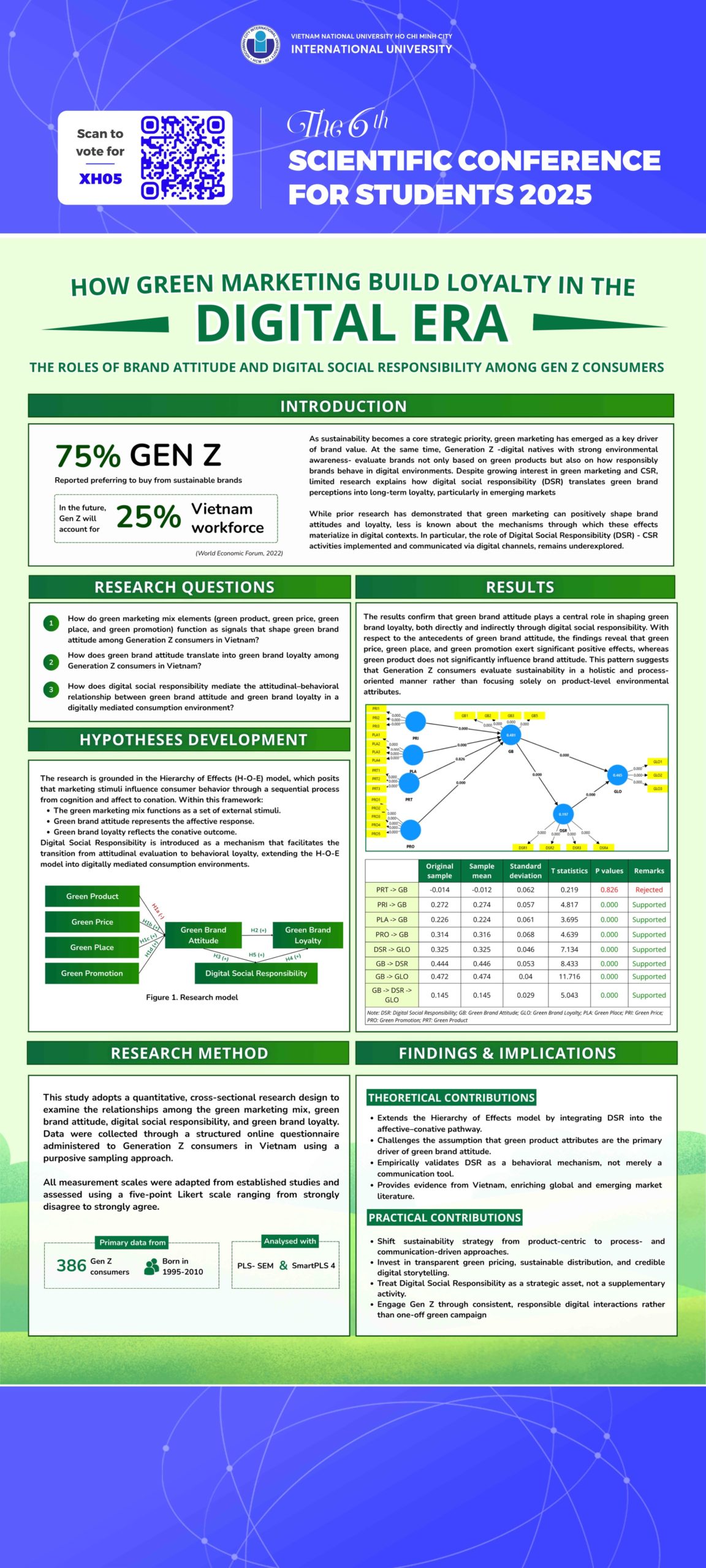
Poster of Bùi Thị Mỹ Trà’s research project, which won the First Prize at the 6th Student Scientific Research Conference in 2025.
BTT: Do you have any advice for students who want to start doing scientific research, especially those working independently like you did?
Bùi Thị Mỹ Trà: From my personal experience, I would like to say that students should not be too afraid to start doing scientific research, especially when they do not have much experience yet. The most important thing is not knowing everything from the beginning, but having the courage to start, staying persistent, and always being proactive in learning. The university’s lecturers have strong expertise, are very dedicated, and are always willing to support students in their research projects. Therefore, I believe that finding a suitable supervisor, managing time effectively, and being open to revising and correcting mistakes throughout the process will help make scientific research a truly valuable journey—not only in terms of results, but also personal growth.