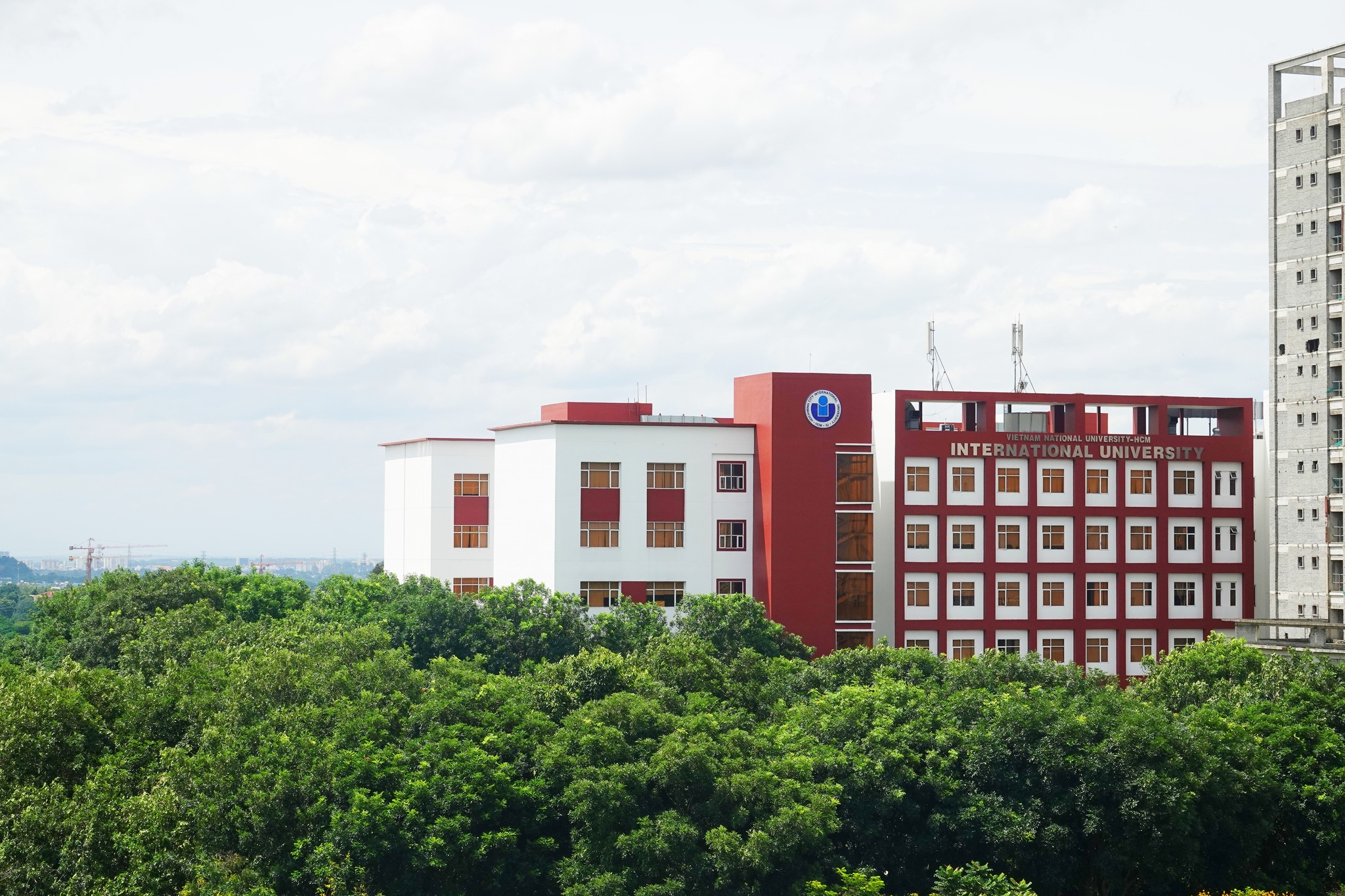
INTERNATIONAL UNIVERSITY: 2026 ADMISSION EMPHASIZING FLEXIBILITY, INTEGRATION, AND INTERNATIONAL STANDARDS
Entering the 2026 recruitments season, International University (IU) – National University Ho Chi Minh City (VNU-HCM) continue to affirm the development orientation as a public university teaching entirely in English, according to international standards, while expanding access opportunities for candidates through a flexible and multi-criteria admission mechanism. This year’s admission plan demonstrates the school’s proactive adaptation to the demands of higher education reform, as the evaluation of competencies is no longer limited to a single exam but aims to comprehensively assess the learning process and development potential of the students.

Two recruitment methods – expanding opportunities, ensuring fairness
In 2026, IU – VNU-HCM expect to enroll 2,300 students for both programs: Degree awarded by the IU and the joint program with foreign universities. Two admission methods will be implemented: Direct admission, priority admission according to the regulations of the Ministry of Education and Training (accounting for about 1% of the quota), and Comprehensive admission – the main method.
The comprehensive admission method is built on the principle of integrating multiple sources of evaluation data. The admission score is converted to a scale of 100, including the National High School Graduation exam score; the Competency Assessment exam score of VNU-HCM; the final average scores from grades 10, 11, and 12 according to the combination of 3 subjects, along with bonus points and priority points (if any). This calculation method helps balance long-term academic ability, the capacity for comprehensive thinking, and performance in standardized tests.
Converting the components to a common scoring scale not only ensures transparency but also helps candidates easily track and proactively calculate their chances of admission. assessing abilities in a multidimensional way rather than relying entirely on a “decisive moment”.
Extra point – encourages integration and creativity
A significant point in the 2026 admission plan is the bonus points policy for candidates with international English certificates such as IELTS or equivalent; candidates who win prizes in excellent student competitions, scientific research awards, or prestigious academic contests.
This policy clearly reflects the school’s orientation toward integrated training. In the context of globalization and digital transformation, foreign language proficiency and research and creativity skills have become important factors that help students quickly adapt to the international academic environment. Appreciating these efforts right from the admission stage not only motivates high school students but also helps the school select candidates who align with its educational philosophy.
Language proficiency standards – a mandatory foundation for an international learning environment
As the first public university in Vietnam to teach entirely in English, IU identifies language proficiency as a pre-requisite. For training programs in collaboration with foreign institutions, candidates must achieve a minimum IELTS score of 5.5 or the equivalent of level 4 according to the 6-level Foreign Language Proficiency Framework for Vietnam, or B2 level according to CEFR.
In case of failing to fulfill the standards, candidates may be conditionally accepted and must complete the English requirement within a maximum of 12 months. This mechanism both guarantees the quality of incoming students and creates opportunities for potential candidates to access an international training environment.
Studying entirely in English helps students directly access the latest curricula and academic materials, while also developing professional thinking linked to the global context. This is an important advantage when entering a highly competitive job market.
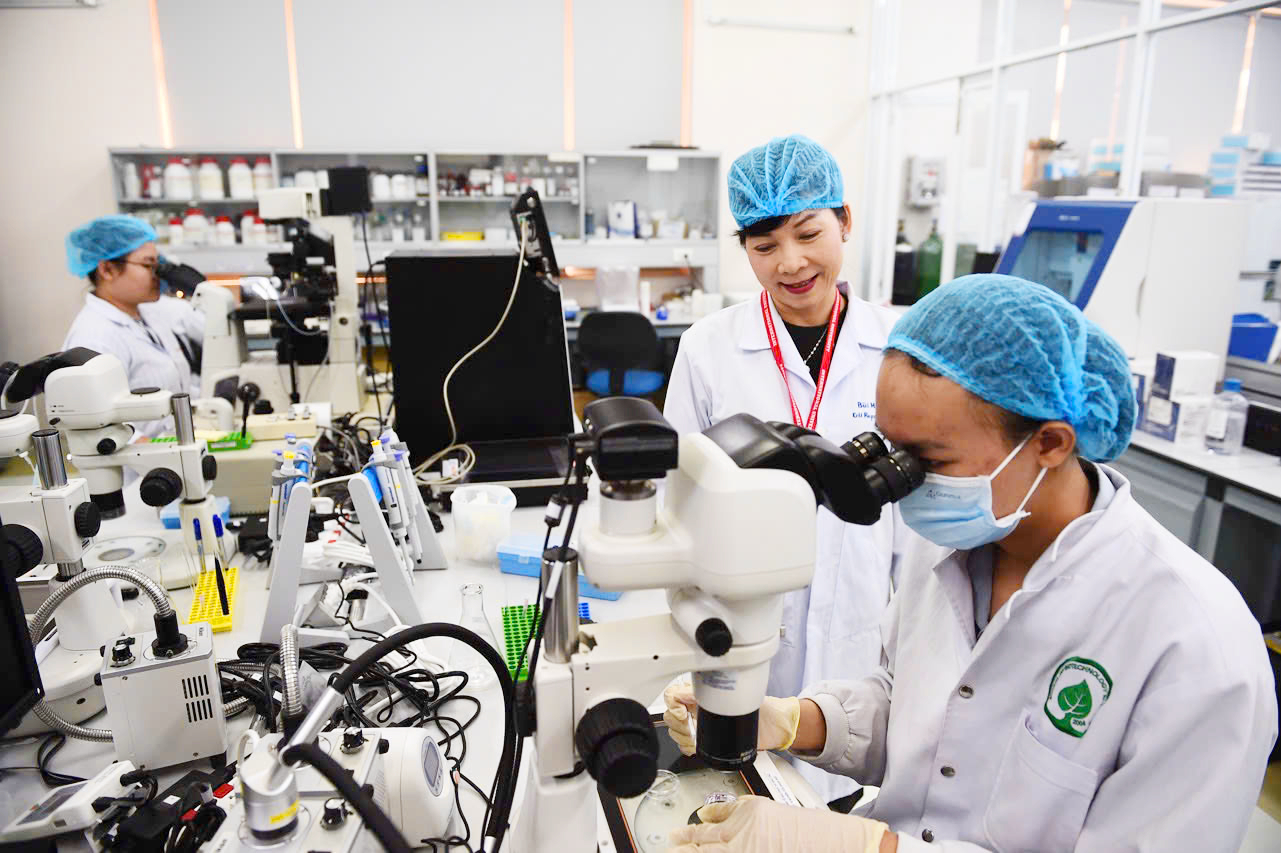
Various training program system, aligns with international accreditation standards
After 22 years of development, IU currently offers 24 undergraduate programs, 11 master’s programs, and 5 doctoral programs. The fields of study focus on engineering, technology, economics, management, and life sciences – essential disciplines in the country’s development and integration process.
The quality of education is affirmed through domestic and international accreditation systems. The school has achieved educational institution accreditation from the Ministry of Education and Training (2016), AUN-QA (2018), and ASIIN (2023). Numerous programs achieve the standards of prestigious accreditation organizations such as ABET, ACBSP, FIBAA, ASIIN, and AUN-QA. This is a testament to the school’s continuous efforts in standardizing its training programs according to international practices.
The faculty team, with over 61% holding doctoral degrees, most of whom were trained at prestigious universities abroad, contributes to ensuring the quality of teaching and research. Students not only acquire knowledge but are also guided in independent learning methods, critical thinking, and scientific research skills.
Educational environment connected to research and practice
As a member of VNU-HCM, IU students gain access to modern facilities and a strong research environment. Undergraduates are encouraged to engage in high-level research alongside faculty as early as their first year, had the opportunity to publish scientific papers, and attend international conferences.
In addition, international joint and transfer programs open up opportunities for studying abroad in a flexible pathway. Students can experience an advanced academic environment, expand their international network that still optimize costs compared to full-time studying abroad.
IU also focuses on training soft skills, leadership skills, teamwork, and problem-solving – essential competencies in a globalized work environment. Graduates not only meet professional requirements but also confidently integrate and adapt to the rapid changes in the labor market.
Recruitment 2026 – a strategic step for a new development phase
The recruitment plan for 2026 of the IU demonstrates a harmonious combination of expanding opportunities and maintaining quality standards. In the context of a competitive higher education environment with high demands for integration capabilities, the University continues to position itself as a high-quality public training institution, closely linking teaching, research, and internationalization.
For candidates, choosing IU is not just about selecting a field of study, but also about choosing a standard training environment where specialized knowledge, comprehensive skills, and global thinking develop in parallel. The 2026 recruitment, therefore, is not just an admission milestone, but the starting point for the journey to become high-quality human resources in the era of integration.