YOU DON’T NEED A LOT OF MONEY TO MANAGE FINANCES – GOOD MANAGEMENT IS WHAT CREATES WEALTH

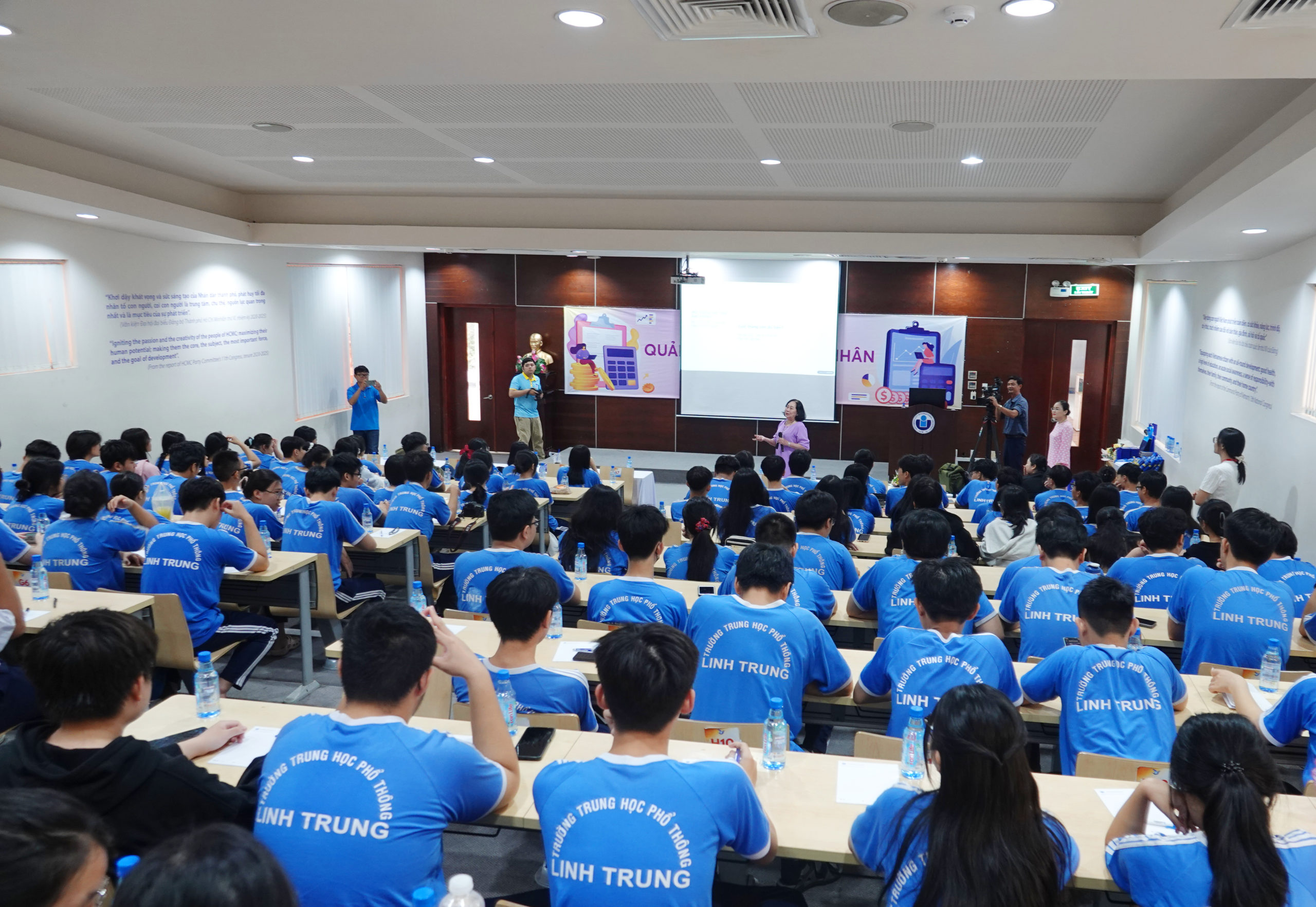
On the morning of December 14, 2025, International University (IU) – Vietnam National University Ho Chi Minh City organized a public lecture titled “Personal Financial Management”, featuring an engaging presentation by Assoc. Prof. Dr. Võ Thị Quý, Lecturer of the School of Economics, Finance and Accounting.
To develop high-quality academic programs that are constantly updated and incorporate the latest advances in science and technology, International University (IU) regularly organizes public-oriented talks, conferences, and thematic seminars to provide useful and practical information for a wide range of participants. Each year, IU’s Public Talk series—designed for high school students as well as students from universities and colleges in Ho Chi Minh City and neighboring provinces—attracts strong interest and participation from students and teachers alike.
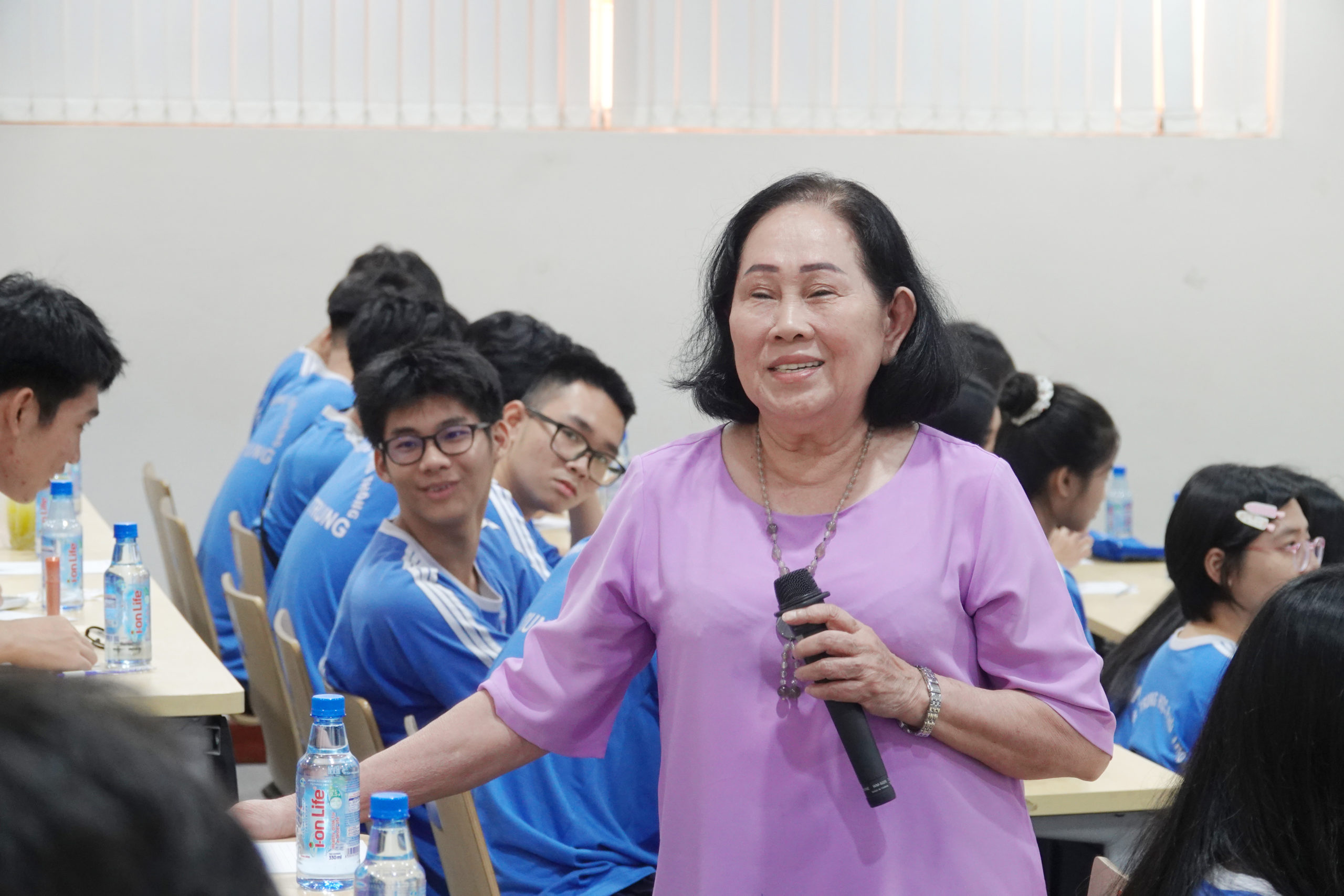
Assoc. Prof. Dr. Võ Thị Quý – Lecturer, School of Economics, Finance and Accounting – Key speaker of the December 2025 Public Talk program.
Assoc. Prof. Dr. Nguyễn Ngọc Duy Phương – Head of the Office of External and Public Relations, International University (IU) shared: “The Public Talk series organized by International University in 2025 began in June and continued till the end of the year, featuring a wide range of engaging topics delivered by IU lecturers from various schools and departments, as well as well-known guest speakers from outside the university. From June through July, August, September, and October, we successfully organized six programs with the participation of nearly 1,100 high school students. This December, we continued with the final talk in the series, themed ‘Personal Financial Management’. All of these programs aim to provide students with accurate insights into different fields of study, helping them develop appropriate and well-informed orientations aligned with their passions and abilities.”
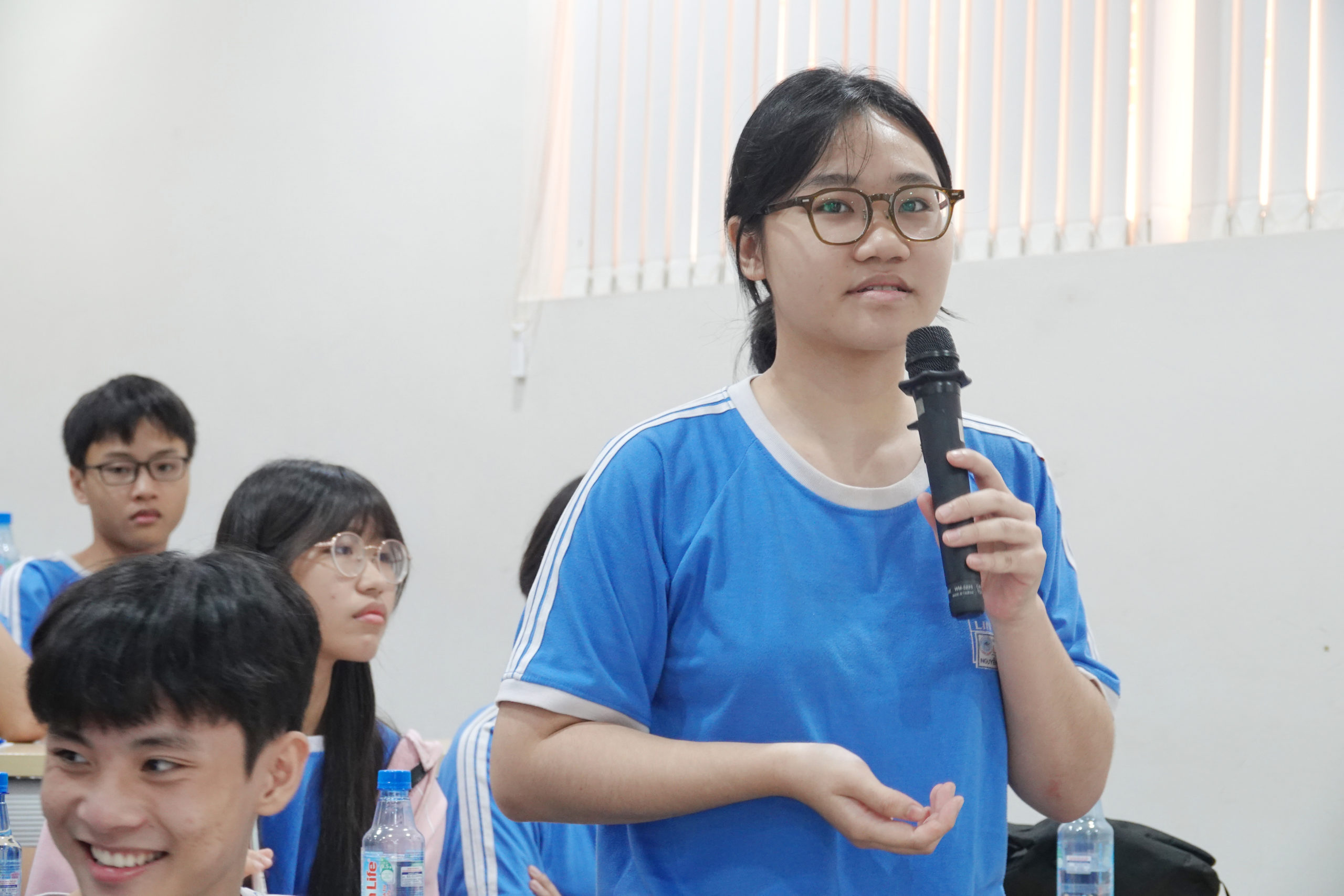
Students from Linh Trung High School raised questions to the speaker.
As the December program marked both the final Public Talk of 2025 and a time just before students entered their end-of-term examinations, IU was determined to devote time and effort to organizing an engaging topic. The program aimed to equip students with essential skills in income and expense management, helping them become more confident and independent in their studies and personal development.
Personal financial management plays a core role in helping individuals control cash flow, achieve financial goals, build stability and financial freedom, and reduce stress. This is done through effective spending plans, saving, smart investing, risk prevention, and the efficient use of money to improve quality of life, avoid debt, and build a prosperous future.
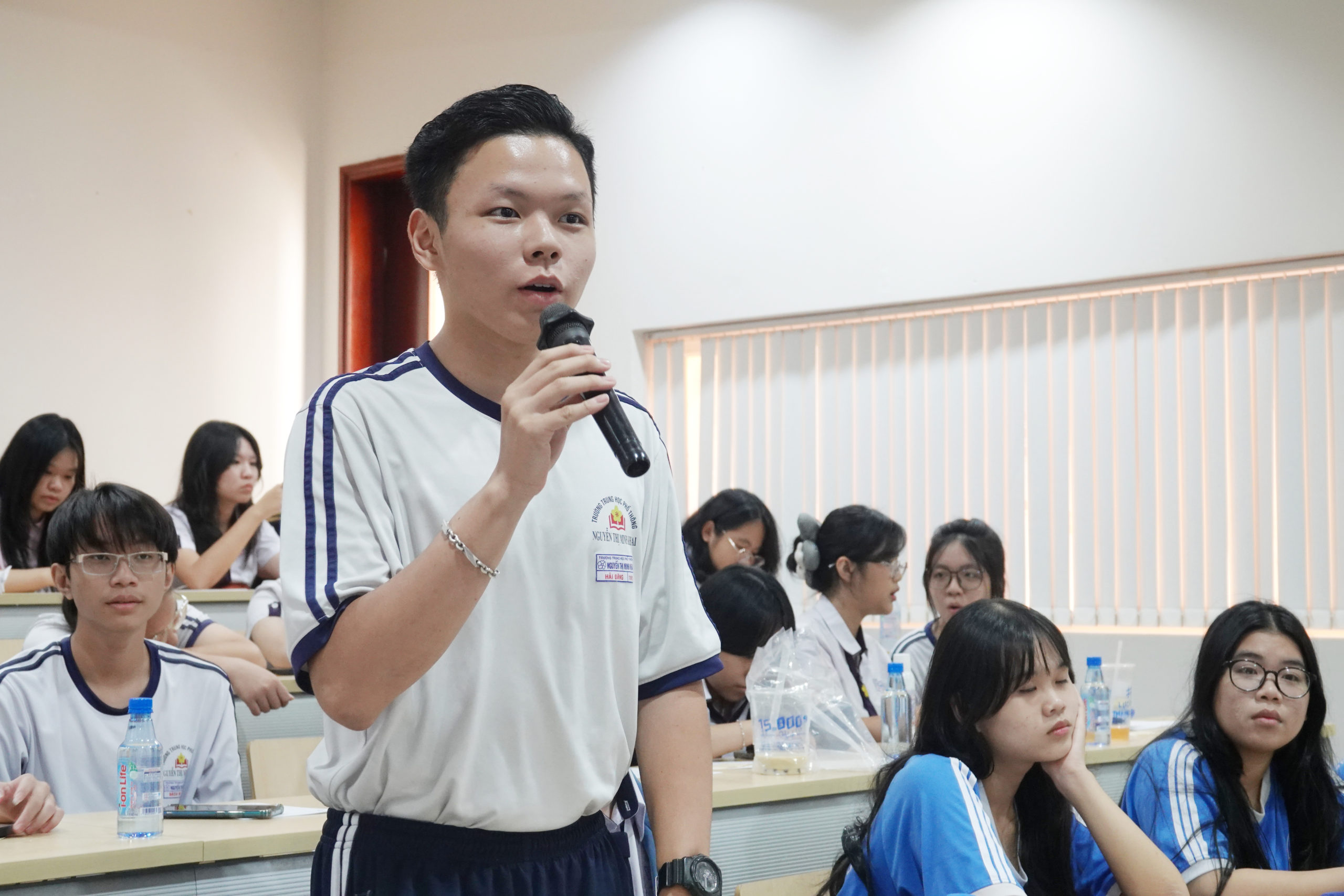
A student from Nguyễn Thị Minh Khai High School shares their perspective on the issue raised by the speaker.
Assoc. Prof. Dr. Võ Thị Quý emphasized: “Young people learn about finance not to get rich quickly, but to avoid being poor in the long run. For high school and university students, allowance money can be considered their ‘first income,’ and this is the very first opportunity to learn how to manage money responsibly. The habits of spending and saving that young people build today will directly shape their future financial well-being.”
Sharing with hundreds of students attending the program, Assoc. Prof. Dr. Võ Thị Quý pointed out common mistakes frequently made by young people, such as emotional spending (shopping when happy, sad, or stressed), trend-driven consumption, failing to track daily expenses, and assuming that “having little money means there is no need to manage it.” In reality, however, “it is not that you need a lot of money to start managing—it is good management that leads to having more money.”
Assoc. Prof. Dr. Võ Thị Quý provided concrete guidance to help young people manage their money, ranging from recording daily expenses and setting financial goals to carefully distinguishing between “needs” and “wants” before spending.
In particular, she emphasized a practical money management rule: 60% allocated to essential expenses (food, education, transportation), 30% for personal interests and discretionary spending (shopping, entertainment), and 10% set aside for savings for the future.
In discussions with students, Assoc. Prof. Dr. Võ Thị Quý also offered advice on earning income and ways to avoid financial traps such as disguised multi-level marketing schemes, risky financial investments, and “get-rich-quick” opportunities.
Her insights equipped students with essential life skills, helping them build healthy financial habits—saving, spending wisely, and investing prudently—while fostering independent thinking, self-reliance, and responsible decision-making. These foundations will help students avoid debt, reduce future financial pressure, and establish a solid basis for a stable, financially independent life.
The School of Economics, Finance and Accounting is one of the leading academic units in the training of economics, finance, and accounting disciplines, and has achieved FIBAA accreditation—a prestigious international quality assurance standard. With a modern, internationally benchmarked curriculum delivered entirely in English, the Faculty has supplied high-quality human resources to numerous organizations both in Vietnam and abroad. Guided by the mission of equipping learners with the ability to “think globally, act locally,” the Faculty closely integrates theory with practical application.

Nearly 200 high school students participating in the program spent 90 minutes touring the campus before attending the main session on the morning of December 14, 2025.
The School of Economics, Finance and Accounting trains graduates with a professional work ethic, strong knowledge base, and essential skills, fully prepared to take on key positions in domestic and international enterprises, multinational corporations, non-governmental organizations, research institutes, universities, and government agencies. Students are continuously trained in teamwork skills, critical thinking, independent and creative thinking, professional communication, time management, legal and social awareness, as well as advanced professional knowledge delivered in English throughout their studies.
In addition, the Faculty integrates and standardizes its programs with a strong practical orientation, ensuring alignment with the requirements of internationally recognized professional certifications such as CFA, CMA, ICAEW, ACCA, and CPA.
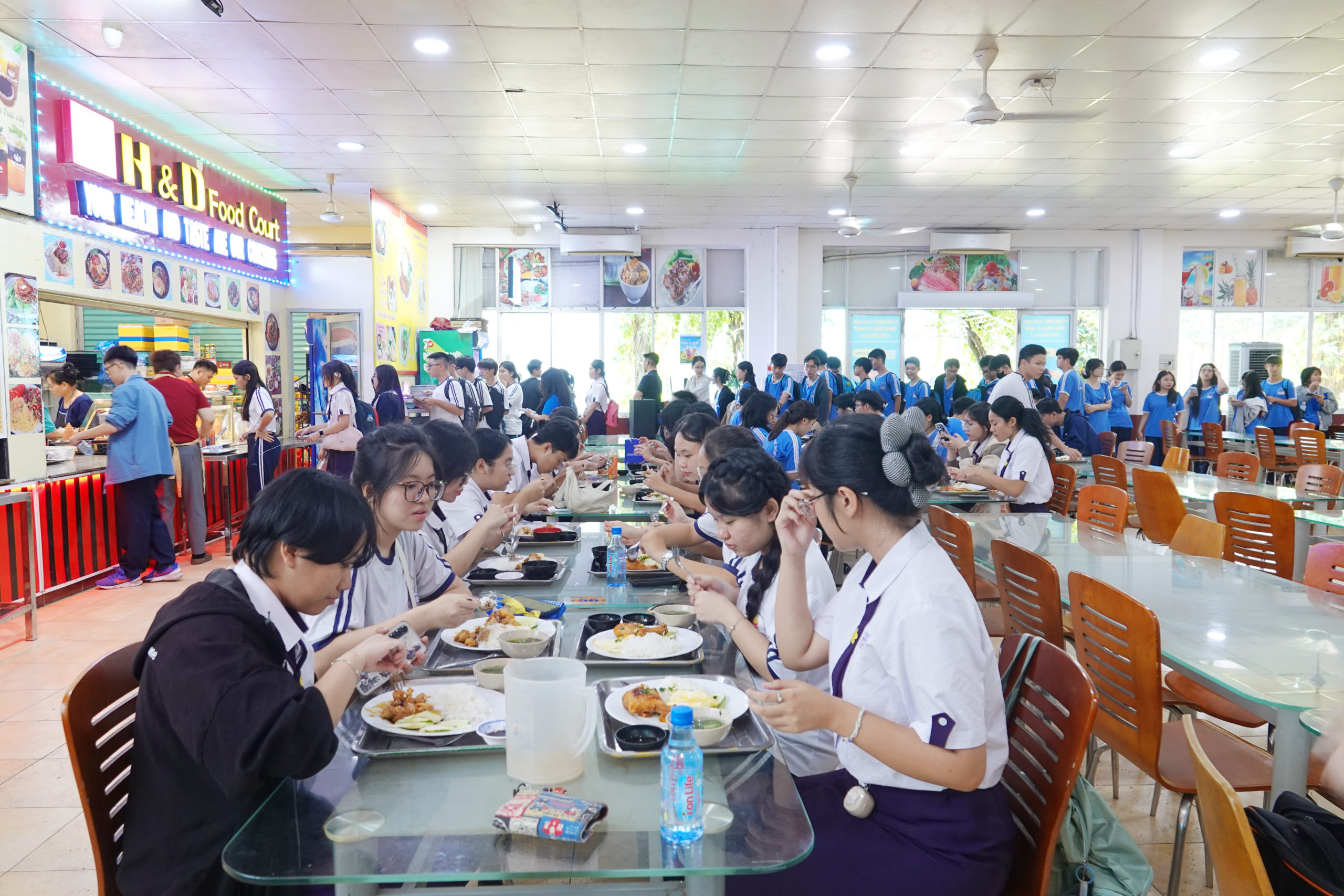
Students enjoying lunch at the International University canteen on December 14, 2025.
| After graduation, students from the programs under the School of Economics, Finance and Accounting can begin their careers at financial and securities companies, banks, investment funds, multinational auditing firms, or work as professionals in their trained fields such as accounting, auditing, tax consulting, cost control, banking, financial analysis, risk analysis, business support analysis, and accounting–finance research, among others.
In practice, students from recent cohorts have secured employment at well-known organizations such as HSBC, ANZ, Unilever, KPMG, Deloitte Touche Tohmatsu, Ernst & Young, Intel, Nokia, AC Nielsen, and Ogilvy & Mather. Newly graduated students may also gradually take over family businesses or pursue entrepreneurship by pooling capital to establish joint-stock companies, turning their own business ideas and strategies into reality. |
Sustainable Development Goals: SDG4-Quality education